Showing posts with label jak. Show all posts

Friday, 17 November 2023

Why I Don't Recommend Breath of the Wild (to my friends)


In Edge's December 2023 issue, The Legend of Zelda: Breath of the Wild ranked #1 in their 100 Greatest Games feature. In their 2017 review, they gave it one of their coveted 10/10 scores. The 2023 top 100 list wasn't merely curated by Edge staff. The votes for the Top 100 were collated from an eclectic mix of 100 representatives from the games industry. But, if you don't trust Edge, or their industry poll, or Famitsu, or Geoff Keighley's Game Awards(!), then you can rest assured that I personally rate the game as an all-timer. It is one of the best games of all time.

I don't recommend it to my friends. 

Before we dig into the deeper reasons I'll deal with some low-hanging fruit. Anyone who would have been excited to play Breath of the Wild probably already has, or at least has some real-world reason that's stopped them from doing so. Not everyone has a Switch. It's one thing to recommend a game, but another to recommend a major hardware investment upfront, which is also why I don't recommend VR games very often. Perhaps the least trivial reason in this grab bag is time poverty. I generally refrain from recommending anything that may require a literal month's worth of someone's free time, especially if I know that a person's leisure time comes at a premium. I love the One Piece manga but I've never attempted to recruit someone into the cult. It's just plain unethical.

It's also a waste of a recommendation. You don't get unlimited swings of that particular bat. Make each recommendation as if it's your last. I'm trying to develop an internal algorithm that takes the friend before me as an input in such a way that the output recommendation will be as close to the perfect fit for that person. If I assume that I only get one swing of the recommendation bat, I'm sure as shit endeavoring to pick something fucking excellent. 

The Legend of Zelda: Breath of the Wild has never survived the trip through my own personal algorithmic nightmare gauntlet. Dark Souls hasn't made it through. Super Mario Odyssey hasn't made it through. Gunstar Heroes for the Sega Genesis made it through once, but those circumstances were very particular and unlikely to come up again soon. These are my personal favourite games but I rarely take up people's time convincing them to pick them up.

My personal recommendation system is trying to maximise the enjoyment that any given friend (F) has with a game (G) that I've recommended. I do this by decomposing enjoyment into two distinct factors. Factor One: Probability of Play (PoP) which is the chance that my friend will actually play the thing that I recommended. Factor Two: Enjoyment Assuming Play (EAP) which is how much fun I think a friend would have assuming that that they play the game.

So we have Enjoyment of (G,F)  = PoP(G,F) * EAP(G,F)

The method now is to put a list of candidate recommendations through this formula and choose the highest-scoring one, provided that the highest-scoring game (G*) is going to provide sufficient joy for that person.

So what affects each of these factors? Let's start with PoP, using Breath of the Wild as our candidate. We already covered 'they played it already' so let's dig deeper. I got my mum to play it because she likes long walks in the Lake District and the fantasy of riding horses through open fields. I know she hasn't beaten Calamity Ganon or would particularly care to but my pitch wasn't based on defeating evil. It was about riding horses and lovely landscapes. It also didn't hurt that she had ready access to both a Switch and a copy of the game already. Didn't even need to leave the house. On the other hand, it's got 100+ hours of play time which immediately disqualified a friend of mine who was trying to finish their Masters that year. An easy pitch after dissertation submission, but not before!

Now onto Enjoyment Assuming Play (EAP). What affects that? How about 'the game requires a degree of comfort with twin-stick movement controls'. That makes it a non-starter for more people than you might think, as well as a host of other game literacy and accessibility issues the game doesn't address. Not to mention that the Switch doesn't offer players many ways to customise their experiences to their specific needs. What about the vast non-linearity of the game? An appealing feature to many, an anxiety-inducing nightmare for some, or simply too little direction for some players to enjoy. My mum did enjoy the horse riding but she wasn't about to deal with the Divine Beasts any time soon.

A note on using the algorithm. You don't need to be exhaustive. Your best first guess is probably quite good, but by fuzzily running your candidate pitches through the equation above, you can stress test it with a little more structure in mind, and maybe give yourself a framework to attempt to find a better recommendation. Why don't we try it with Breath of the Wild? Let's try it on a friend of mine with a Switch. They had a Wii in the past, and they quite liked Super Mario 3D World but didn't get on well with Odyssey.

For PoP, we're not looking good here. When asked about Odyssey it was the relative non-linearity and vastness of the game that was off-putting. I'm unlikely to sell them on another open-world-sounding game, and even if I did, the EAP probably won't be all that good either. I can see them getting bored and annoyed more than I can see them pushing through the pain barrier and 'learning' that Breath of the Wild is really good. How about I pitch the remake of Link's Awakening Instead? Might not be the best recommendation I could make but it has a higher PoP  *and* a  higher EAP so I may as well forget about Breath of the Wild as far as this person is concerned. 

And you know what, this isn't the first time I've forgotten about it either. I just don't recommend it to my friends. 

Friday, 15 April 2016

Vegan RPGs: Hear me out... wait! Don't go!

Here at 103% Complete we strive to fill all the niches that everybody else misses, which seriously eats into our juicy clickbait revenues. As the title of this post suggests, we're looking to inform and entertain the audience intersection between those who are interested in the politics of veganism and those who enjoy videogames enough to read what I'd (generously) regard as an obscurely popular video game blog.

Available on the app store

Because the OED isn't very nuanced in its definition of veganism, I'm going to take the definition put forward by The Vegan Society itself:

'Veganism is a way of living which seeks to exclude, as far as is possible and practicable, all forms of exploitation of, and cruelty to, animals for food, clothing or any other purpose.'

So what does this have to do RPG games? I'll tell ya. The popularity of RPGs and MMOs with an RPG bent to them have resulted in the development and maintenance of increasingly complex game worlds, with rich character creation, field combat and crafting systems already the norm in the big budget titles. The developers behind such games want to create a world into which the player can inject as much of their creativity and personality into their gameplay as they wish to. These varying degrees of expression are part of the huge draw these games have. 


The possibilities are endless
We see in the Mass Effect series that notions of gender identity need not be heteronormative, In Eve Online you can carve out a niche as an operative in a megacorporation and have an equally valid experience as someone who exclusively engages in mining or space piracy. Even games like Minecraft without strict metrics for victory and success invite roleplaying servers to pop up. But (and this is where I get to the vegan bit, I promise) could you exist and thrive in such a world as someone who actively would rather not exploit in-game animals wherever possible? Even if you're not a vegan in real-life it may be an interesting roleplay option. I know people who roleplay being a shopkeeper in The Elder Scrolls IV: Oblivion, which I remind you is a single player game where shop ownership is not coded into the game. Being a vegan mage is far from the oddest roleplay option out there.    

So how can a would-be vegan player fall foul of animal exploitation in their RPG gameplay? Let's look at some common categories.

Food: Diet is the obvious place to start with real life vegans but in many RPGs, keeping on top of your characters' nutrition isn't integral to being competitive. Topping up your HP and MP can usually be handled with spells, potions or just a good night's sleep. However, more often than not it is the slabs of beef and wheels of cheese that provide the greatest benefit as consumables in games such as in Contact and Punch Club, where simply frying a steak exceeds the usefulness of any plant based cooking in the game if it even exists at all. You can get away with a vegan diet in the Paper Mario series, even if there is the option to literally smack animal called Whacka across the head and consume the swelling bruise that results from the assault.  


You have to brain this adorable creature in order to obtain a huge health potion.

Gear: Generally speaking, most Western RPGs eventually get to the point where you're working primarily with metalwork to produce armour and equipment. Cruelty ridden leatherworking and tanning options are usually superseded by metallic, magical or other inorganic materials. If you really can't find an alternative to leather in the early game, you can usually 'do it in your pants' until you level up, even if your pants are made out of... fur. Dammit, Skyrim! On a side note, being creative in Minecraft takes a massive hit because coloured blocks (cubes of dyed wool harvested from cubic sheep) are a no-no. 

The big problem with gear comes when the game has a loot based crafting system, which requires you to kill enemies (usually creatures) in order to assemble the items that you need. Even if your game's economy is driven entirely by gold, most traditional RPGs require a whole lotta compulsory killing to proceed one way or another which leads us to...

XP/Progress: Killing monsters and mobs to get XP helps you gain LV which you absolutely need in most games to make any progress whatsoever. Unskippable bosses. Death and blood is usually hard to avoid. Undertale is a notable exception to this rule which leads us to really 'lawyering up' the definition of veganism, which includes 'as far as is possible and practical'. One of the narrative themes of Xenoblade Chronicles X is the peaceful coexistence with nature wherever possible. Predatorial beasts will hunt you down but many of the creatures will never pose a threat to you and your team and it is perfectly possible to leave them well alone. Although the apparent 'threat to humanity' is never realised if you don't purge these 'pests' at all. Seems like some thinly veiled pro-hunting propaganda to me...

*Michael Jackson's Earth Song plays*
The 'random encounter' mechanic underlying most RPGs heavily implies that the indigenous creatures are attacking you directly, which somewhat excuses the player of any harm they do to the creature in order to survive. But since fleeing battle is usually an option, the vegan RPG player is encouraged to acquire the minimal murder related XP possible to progress through the game. If you want to do the most vegan run possible in Final Fantasy VII, you're going to have to restrict your grinding activities to enemies which are entirely inorganic in nature... and you're going to have to do without Knights of the Round because of the implied avoidable Chocobo abuse, which brings us to...

Pokémon:  I'm sorry but Pokémon is just out of the question. The 'they want to fight' argument just falls apart under any critical examination. The entire game is about violent animal bloodsport. You can hang around in the starting town in a perpetual state of helping you mum to move in to your new house, but once you take that starter Pokémon... you're an exploitative monster. Shame on your and your house.  Monster battlers of almost any other variety fall foul of this too so all of you hardcore Bomberman Tournament fans out there can just hang your head in shame.
Pictured above: Barbaric bloodpsort

So next time you enter your own preferred virtual fantasy world, try and examine how dominated your experience is by the exploitation of animals in that world. As for me, I'm heading back to my Animal Crossing village, where the bugs and fish specimen collections remain proudly empty and my debts to Tom Nook, remain very high indeed. 


Sunday, 29 June 2014

Twilight Princess pretty much forces us to say goodbye to traditional Hyrule.

by Jak Marshall (Spoiler warnings).

I'm just working through my gaming list, which includes some second playthroughs of older titles including The Legend of Zelda: Twilight Princess, which I recently finished. To put this article into context, Twilight Princess was the first major console release from the Zelda franchise since Wind Waker, a game which divided opinion with it's cartoon visuals, shorter-form game structure and it's ocean dominated overworld. People would have to wait until the winter years of the Gamecube for the release of Twilight Princess or as I like to think of it, Ocarina of Mask HD as the title is essentially what I imagine a fan-made re-release of the N64 games would look like. I'm surprised there wasn't an angry moon in the sky making a cameo. The game is a deluxe package for fans of the previous generation's Zelda titles. Hell, "Zelda as a boss" comes straight out of a fan forum.

This isn't from Deviantart, this is in-game evilled up Zelda. Right outta fanfic.
Twilight Princess brings us back to a Hyrule Field which is bigger and braver than before and gives us Epona more or less from the beginning to gallop around its vast expansive areas. There is so much to find in this game that recent E3 talk of an open-world type Zelda title almost feels a tad on the late side. On my second playthrough of this giant I found entire sections of the game that I'd never seen before and a lot of this is easy to miss. Shorter form titles like Wind Waker and more linear titles such as Spirit Tracks and Skyward Sword are probably Shigeru Miyamoto's way of telling us that he is sick of players not finding all the areas his teams bother to put in the game nor being good enough at his games to see them through to the later stages. He didn't work his (iron) knuckles to the bone on the Spirit Temple just so that half the player base would never fight Twinrova because the Water Temple put them off!   
Seriously though, strap in. This temple is a marathon.

This game is so generous, as a matter of fact, that we probably need never return to Hyrule in this format again. The aforementioned Water Temple was given a make over in the form of the Lakebed Temple, manages to capture the 'tricky puzzle dungeon' theme of the Water Temple without making it nearly so tedious and pace-killing. The Lost Woods type sections with the Skull Kid is about as much Lost Woods action as anyone is ever going to need. There's enough dark-world/light-world action to keep that crowd happy.
  Almost every enemy from the console releases up until this point has had a make-over and so too have many of the bosses! They were even generous with the items! Bombs come in three flavours, you not only get one but two grappling hooks. They even overhauled the fishing mini-game from Ocarina! The fact is that, by the time you've finished with Twilight Princess, you'll have stuffed your face with classic Hyrule flavour so much you'll not want any more. Heck you even have to fight four different forms of Ganondorf before this game is through.

Seven hidden sword skills... none of which are any use in this fight at all.

My point is that I honestly think that Twilight Princess is the last we should see of a traditional Hyrule for quite some time and that the series should keep experimenting with new ideas. Skyward Sword had a very different overall aesthetic to it and started playing around with some great new ideas. Time bending crystal pirate ship dungeons in a desert world manned by cute robot people? That's new. An entire dungeon built around the concept of a sliding tile puzzle? Novel. Whilst still keeping in with the mythos of the overall Zelda universe, Skyward Sword showed us that it's quite alright for the series to take us on new journeys without losing that grand Hylian charm. If E3's teaser trailer is anything to go by, the latest game in the Legend of Zelda series promises to be filled with innovative ideas that draw inspiration from the older titles in the series rather than simply rehashing them. It may well be Hyrule after all, but hopefully not as we know it.

Saturday, 12 April 2014

Gaming Netiquette: "Well Played" in Hearthstone.

For those of you who haven't tried Blizzard's new entirely virtual collectible card game, Hearthstone: Heroes of Warcraft, I would heartily* recommend it. It's one of the few competitive online games which is appealing to all skill levels, handles the free-to-play/monetisation side of things with great care and probably most appealingly, protects you from unwanted abuse from those toddlers out there who like to swear at people on the internet whether they are winning or losing. But that's not to say that Blizzard didn't leave considerable leeway for complete strangers to taunt each other in a subtle but powerful way. 

The most common meanings of this emote.

Emotes are the six word language that each character class in the game possesses. To actually chat with someone the traditional way you need to 'friend' them first so for the most part you will be letting the voice actors do the talking for you. I'm sure that the most widely used emote by far is 'Well played' some common uses of which are listed in the above image. A friendly post-game handshake to indicate that all important "gg" moment is something that polite players should do in almost each and every game they play, if you're losing I'd almost say that acknowledging defeat in this way is tantamount to a post-game handshake anyway. It's just the decent thing to do because it's sportsmanlike and everyone who takes part in gaming should feel like they are having fun, even in defeat...

 ...except this guy.

Three turns in a row he's kept me waiting like this...

For those of you who aren't familiar, my opponent (whose name has been blurred) has lost. 100% Lost. The only way that I could have lost at this point is if I had conceded the game voluntarily. Yet in theoretical defeat, my opponent has decided to leave his keyboard and force me to wait for his turn timers to run down in full before allowing me to actually win, or concede defeat out of sheer impatience. This is sour grapes at it's finest. In a game which is deliberately designed around preventing abusive players from having a negative influence, this player, in spite of well funded opposition, has found a way to stick a thorn in my paw. I feel safe in saying that I did not waste time shaking this player's hand as I whittled his health down to zero. This did not make me feel any happier.

Luckily, someone in Blizzard was watching and decided that I was worthy of compensation. After winning the game I was awarded with enough gold to purchase a booster pack and lo and behold, a legendary card for the Paladin class I was just playing as.
Getting one of these 'orange gem' cards feels incredibly satisfying anyway.

Well played Blizzard, well played indeed.


*The temptation to have the 'hearth-ily' pun in my opening sentence was great, but I thought better of it. I leave it here for the hardcore** readership.

**Footnotes are hardcore. Deal with it.

Wednesday, 19 March 2014

2048, 4096 (and possibly Threes) - a brief strategy guide.

In a lazy and cynical attempt to cash in on the buzz around smash hit browser game 2048 (and it's countless clones) I'll tell you briefly how I managed to do this.


I won!
Just follow these simple heuristics:

1) If you see a risk free chain of moves which combines several high value tiles in a row 32's into a 64 that will then be next to another 64, which when combined to make 128 will be next to another 128... then take advantage of it!

2) When you have more than 7 empty squares (ish), try and bunch up your tiles in a corner. That is to say, ban yourself from using one of the four direction keys (say up) and sparingly use one of the orthogonal keys if you can help it (say, right).

3) If you're in the situation as in 1) but you have no choice but to use your forbidden key (up in my example) use it once and immediately press the opposite key again (down), unless....

4) If you're running out of room, STOP and take a quick breath and see if you can find a good way to combine high value tiles together or just free up some space. If you can combine two or more tiles at once this way that's preferable as you'll have a net space gain of at least one.

5) Be aware that a 2 is most likely to appear in any one of the random empty tiles after every move. I know that sounds obvious but it drives how the game works.

Good luck!

Also be aware that Threes for iOS is a subtly different game altogether, but a lot of the above strategies will still help a little.


Tuesday, 18 March 2014

Gamification Part 1: Gamified e-business

I invited as a guest speaker to run an interactive session on the subject 'gamification' aimed at third year business and marketing undergraduates. Gamification is simply the process of incorporating game elements into functions which are not purely designed for gaming entertainment. In this article I focus on how this technique is used to gamify online businesses. An expanded and edited segment of my original lesson content and publish it here on 103 for the interested reader. 


Games have been proven to reinforce engagement and influence consumer behavior in the business world. Social games (e.g. Angry Birds, Candy Crush) currently integrate many desirable features of online businesses, as specified in e-business literature. Games are rich content by definition, syndication is readily implemented, gaming necessitates a level of participation (especially if it has a strong social element) and games already appear on every relevant variety of electronic content access platform. It is also very easy to gather and track a wealth of gameplay data to track engagement and conversion rates once a game has been created.
 
Here are a couple of simple examples of game mechanics that are designed to get you to spend real money online buying products or services which are not necessarily games or game related merchandise.

Free to Play: 

A website or e-community built mostly around participation in a game where the cost to play is usually nothing at all. The attraction and retention comes from the game itself being popular with the customer base. The conversion can come in many forms. Social games such as Candy Crush Saga are extremely popular and the product is in fact the game itself. Coursera is a free-to-play model of education. You can take online courses for nothing and get achievements and points for doing well in quizzes but you need to pay to be accredited. 

In Hearthstone you are always exposed to the opportunity to shop, and people frequently do for that reason alone.

Players tend to purchase real and virtual merchandise to celebrate their enjoyment of the game’s community and this investment in the experience positively feeds back into sustained future engagement in the system over time by the consumer (game first, products second). However chances are your target product/service isn’t peripheral merchandise to a game so developing a game to complement a product you want to sell is challenging to do in an engaging way. Products first, game second is often what we want in business so let’s look at some examples of that.

Points, Levels and Badges:

By far the most common form of e-business gamification is to simply provide some sort of positive stimulus to the customer when they do something you want them to do more of. Loyalty schemes are an example of this but monetary rewards and freebies aren’t the sole driver of repeat/increased business to your website over your competitor’s sites when you use a game. The spectre of saturation means that if a competitor can easily implement your successful game for their own business then they will do so and the differential advantage over rivals is diminished to what it was before everyone implemented their games except now all business have lost money and time implementing games and offers. 

Many of us bought or played inferior Xbox 360/PS3 titles for no reason other than that this felt great.

Creating the belief in the consumer that their actions are contributing to some over-arching record of achievement has a positive impact on sales and engagement. There is a healthy flow of pull marketing from the consumer as they play more of your game and actively seek out content, and push marketing as special offers and new products are integrated into the game in the form of limited time goals/quests. The idea of wasting an opportunity to build up your Nectar or Club Card ‘score’ of points can influence customers into limiting their shopping for goods at stores which do not offer such a scheme.

Abstract, colourful but tangibly worthless experience points, virtual trophies and milestones are powerful on their own but the interactivity needs to be active in order to have the most impact on the consumer’s psychology.  Interest rates, loyalty cards and points which are automatically earned are very passive non-interactive effects in a game.
Bottom centre. Even Snapchat has a completely arbitrary scoring system.

Creating the idea in the mind of the player that they have ‘played’ their way to the offer and the feeling of having ‘won’ the prize of a special discount can be emotionally engaging and more difficult to refuse than if the offer was open to everyone without the need to strive for it. This sustained engagement promotes the brand, sells products and creates a social buzz about the business. All of this hinges on creating a compulsive game environment that integrates the business in an appealing way.

Next Time: 


I'll talk more about how general approaches towards gamifying your online business to make your business stand out on the web. I'll also recount how business students used these lessons to come up with some fairly solid sounding pitches for gamified e-businesses.

Further 'Reading':


1. Skinner Box video by Extra Creditz: http://www.youtube.com/watch?v=tWtvrPTbQ_c
2. Foursquare Analysis.
3. How Nike uses Gamification.

Monday, 27 May 2013

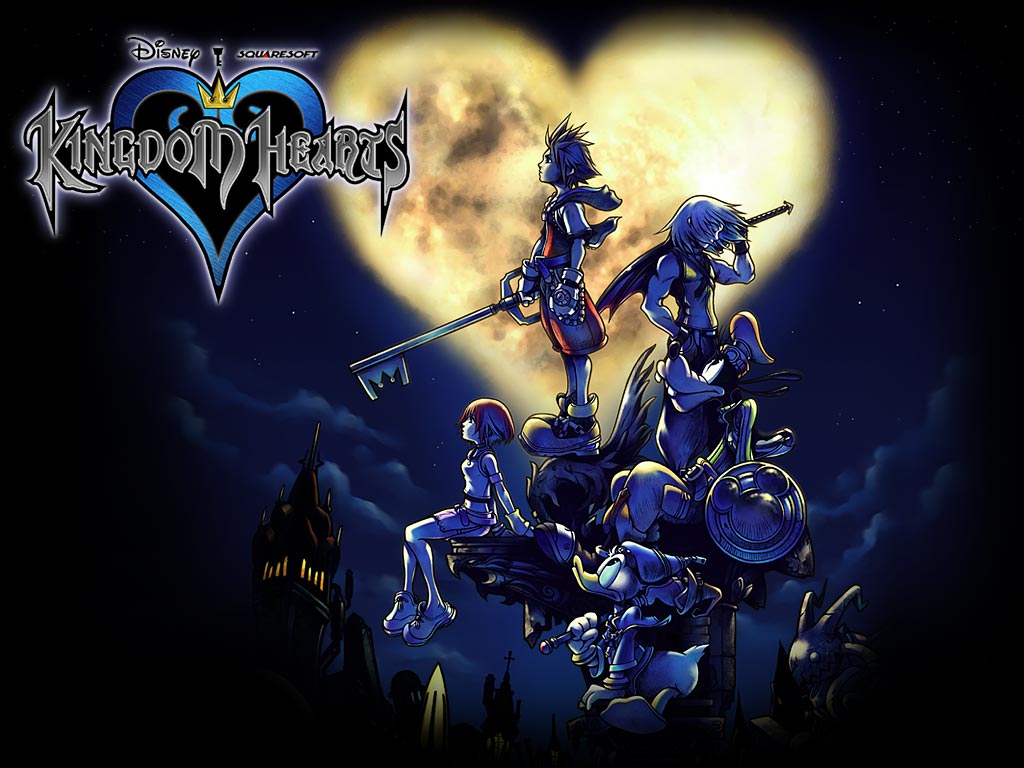
You don't need to understand what's going on in Kingdom Hearts. Nobody does.

Sorry to make a lot of people feel old (or alienate a lot of young readers at once) but It's been at least ten years since Kingdom Hearts came out on the PS2 which was a lovely idea on paper where Disney characters and their associated worlds get smushed together with cameos from Final Fantasy characters and other original content from Square-Enix. It was awesome, taking on the role of Sora... or someone, you got to team up with Aladdin to smash Jafar with a key-sword... or something to go on an epic journey with Donald Duck and Goofy to track down the legendary Kingdom Hearts... or somewhere.


Whatever was happening in this game, it was awesome.

So after having a magical journey fighting The Heartless through Alice in Wonderland, Halloween Town and Neverland among others I ended up in a location called Hollow Bastion and then some stuff happened involving some guy called Ansem, who wasn't really a guy called Ansem as it turned out because of events that transpired in Kingdom Hearts 2, which is actually the third game in the series as a matter of fact, which explains why "Organisation XIII" consisted of only four people due to the rest of them being thoroughly dispatched during the events of Chain of Memories on the Game Boy Advance, which people understandably mistook for a spin-off title instead of a fully canonised, core story title. The Kingdom Hearts series then became a kind of equal opportunities campaign for gaming platforms, having a main series title appearing on smartphones, microwaves and the long since defunct Neo Geo Pocket. 

This fight, of course, being the turning point of the entire story... eventually.

So when I bought Dream Drop Distance for the Nintendo 3DS I was worried that I would be completely lost having not followed the series in its entirety whatsoever. Turns out that although this was true (Who or what is Braig?) it turns out that you can just sort of power through and get to the business of twatting stuff with keys on sticks without having to worry about why you're doing it. It turns out that these games have a habit of saving all their inter-game lore for five minutes at the start and half an hour at the end, leaving plenty of time for good clean Disney related fun for the thirty hours betwixt.

Also, Sebastian becomes the size of a goat in the GBA title. Fun!

Twenty Keyblade (or chi-blade) Masters? Fuggedaboudit you can just concentrating on having fun with Quasimodo! What on earth is Master Xehanort up to? Who gives a shit because... Tron. The series is certainly self-aware of it's own uncontrollably burgeoning plot and makes up for it by being lots of fun to play and very pretty to look at. Just pick up a copy of whichever title is easiest for you to acquire and get to the happy business of speculating whether Disney will be including Darth Vader and Wolverine into Kingdom Hearts 3 due to wealth of real world corporate stuff that has happened since ancient times when Kingdom Hearts 2 (3) was released. Of course, Kingdom Hearts 3 will be closer to Kingdom Hearts 10 at this rate for anyone keeping count but if you've learned anything from my article today is that it does not matter one bit. 


Friday, 10 May 2013

Unfinished Business: Conquering Your Demons.

We all have those memories we wish we didn't have. Embarrassing, humiliating or just downright shameful things we wish weren't part of our histories. All of this is made worse still in that we cannot undo or change the past meaning that our regrets will haunt us forever. Yet I did find that in the case of my very worst regret that I could change the past! I could unmake my regrets and wipe that particular slate clean! Beneath all those damnable atrocities I was responsible for, all the mishandled romances I could have made work and all those embarrassing screw ups in between laid my most bitter regret and that was not achieving a 100% rating in Crash Bandicoot 2: Cortex Strikes Back.

Bitter, bitter regret. With seals.

Now I'm not a die-hard completionist in all walks of my gaming life. I lack the time or inclination to earn each and every achievement/trophy available to me and I don't feel particularly bad about that either. I'm not, shall we say, all dat bovvered. But Crash 2 and I have a history. I played that game quite a lot when I was younger although I never owned it. I had a memory card with a save file on it and would load it up whenever I went over to a particular mate's place or that one family restaurant that had a PlayStation with it on. This was also in the days before literally everybody was on the Internet. It was a time where kids were way more likely to find game guides in magasines than they were on websites or those mysterious not yet invented "blogs" you hear about. Incidentally, I never quite found everything in Crash 2 because believe me my friends, there is some serious 'how the hell?' bullshit going on with the secrets in that game.

Hint: You can't reach that gem from below, or even from this level.

I could probably rant on about that for an entire article and disguise my frustration and lack of childhood success as an deconstruction of secret collectibles and levels in games, but the crucial fact of the matter is that I just did not accomplish what I set out to do in this game after putting considerable investment into it. That's the difference between all the achievements I haven't earned (and didn't care about) and my failure at gem collecting back in the 90s. But recently, thanks to the Playstation Network service, I finally managed to go back and take care of that game once and for all, with a great psychological payoff.

Although the actual in-game 'reward' is not so incredible...

Everyone has had that fantasy about being able to go back in time and transplant their mature mindset into their younger selves. Just imagine how much more confident and competent you would be with the advantage of advanced experience. Well that's exactly how it felt playing Crash 2 again. I had all the extra experience of gaming to deal with the trickier sections, any amount of guides to help me track down some of the more bullshit gems (that game pulls some serious shenanigans I tell you, I usually don't go in for guides) and of course it doesn't hurt that I had complete access to the game too! I was totally unstoppable!

Like this armoured chicken

Fellow 103% writer and friend Ben "Spoon" Winterton has written about gaming to-do lists before but his personal list consists of at least as many games that he hasn't touched at all and games he isn't particularly bothered about completing in of themselves (Banjo Kazooie: Nuts and Bolts is a case in point) as there are games that Ben feels a genuine sense of longing to finish. I would suggest that people reading this article think back to an example of a milestone not quite achieved or a challenge not yet overcome and go back and cross that one off the list. It's high time you did.  

Wednesday, 17 April 2013

"Get on with it!" -- An Impatient Gamer's Lament

I know this is more my TV Blogger friend Yogesh's remit but I'm one of those people that are always trying to get people to watch a TV series called The Wire. I ruthlessly offer to loan out my DVDs and often buy Season 1 as a present for people as a form of encouragement but all too often I see people giving up on the show early on. This is where I insist that they must watch the 'first three episodes' before I agree to leave their home and untie their family by which time their appreciation of the show is sufficient for them to continue watching without my dogged insistence. This is because people have the astounding realisation that the show is great.

I'll let people in the know do the voice in their head. It's way more fun!

But for the longest time I was very indignant about the amount of persuasion people required from me in order to really get into the show. I was frustrated by how much the show depends on word of mouth hype to persuade folks to get past the first couple of episodes without losing patience. I stopped feeling this way over the weekend when I tried to play a series of games published by Rockstar in succession. I tried L.A. Noire, GTA4 and Red Dead Redemption over the course of a long afternoon and found myself getting very agitated by the slow pace at the beginning of each game. It will only be due to the insistence of my gaming friends that these games are worth persevering with that I'll even bother to return to these titles. It's for the same reason that The Wire can lose a lot of people early on and that is because it is such a slow burn in terms of the early pacing.


This is an illustration of slow pacing. You do better.
The only thing is that I can accept slow pacing from The Wire because it was adapted from what was originally a novel. What's more, the story and the world is actually deep and intricate enough to warrant the level of set up and exposition and you can vary up the action plenty due the number of distinct plot lines and characters than the medium of TV allows you to juggle. I won't pick on exclusively Rockstar in this article but to begin with we have Red Dead, GTA4 and L.A. Noire taking its sweet time padding out the early levels of their game with mind numbingly simple stuff. What's worse is that the 'story' we're being told during these tutorial segments is often of relatively little consequence. 

...and you, the player, have to choke it all down.

The first hour or so of L.A. Noire doesn't provide the in-game intrigue to keep you interested in the overall story arc they're building. The newspaper and flashback cut scenes are way more engaging then the mysteries I'm solving at this point and it's sad that the playable narrative content is the dullest thing about what is going on, especially if you pad out the experience further by doing the street crime stuff too. Red Dead has me spend a lot of time trotting about on a horse at the start. It takes forever to actually ride to the tutorial section, which is a largely uneventful horseback tour of a ranch, before I get to my first real mission which is a horse race...

and this is where I turn the console off. Grand Theft Horses indeed!

Not even the modern GTA series lets you see any of the real story until you've plodded through the first few gauntlets of missions. It's almost like these games won't even trust us with their main storylines until we've mastered the most basic controls and game elements. It is to the detriment of the game experience too. The opening of Far Cry 3 takes it's sweet time getting to the point. At least the story is present from the beginning but I feel like I had to jump my way through quite a lot of cut scenes and 'This is how you buy a gun' type hoops before I was allowed to run wild on the island like all my friends had been doing.

I might sound like an old fart here but it's not often that a triple A release comes along where you can just get right into some satisfying action within five minutes of starting a new game. Spec Ops: The Line did a fantastic job of this by getting me right into a firefight straight after the opening chopper section. I had to swallow about a minute's worth of cut scene and that was all. In fact many shooters of the modern era can actually pull off a short badass in media res, opening sequence to get the pace off to a flying start.

Let's look at Final Fantasy 7. It has a killer opening sequence at one of Midgar's Mako reactors . This just goes to show that a longform genre of game like FF7 need not take its sweet time getting to the fun. I don't know how the same company also developed Kingdom Hearts 2 and Final Fantasy 13, mind you. Those games took forever to get going... and were very if they ever did get going.

Seriously, was it an intentional joke that the main character of such a slow paced game is called "Lightning"?
At any rate, third person adventure games like Red Dead certainly do not need to start off as slowly as they do. Less so if the game is a frickin sandbox world of all things. The sheer size of the game world is more than enough padding if padding is what you're trying to deliver. There is no need to pad out the start. It's the worst place to do it. If you're setting up a vastly complex narrative then at least find an engaging and concise way to do it, gamers are there to game after all.

There are only so many long-form products that I'm willing to convince my fellow gamers to press on with despite their shaky starts and I'm afraid that The Wire is quite a tough level of quality to live up to. I don't believe that the in game storytelling of Red Dead is quite up to snuff so you may as well let me use the horse mounted flame-throwers immediately and let me have my fun (Spoiler alert!!)     

Monday, 11 March 2013

How the Candy Crushed me: A Saga

by Jak Marshall

If you've been on Facebook recently, many users who should know better (including myself) have been sucked into playing variants what has become the viral social game, Candy Crush Saga which boasts a rather phenomenal 10 million plus count for monthly active users, which puts the game in the same bracket as FarmVille for general maddening ubiquity.

I personally think that the character design is just off-putting... 

I should put a disclaimer on this article because the game is highly addictive and something you feel dirty for coming back to time and time again. Here's how it pulls you in.

First of all it's a match-3 game of the Bejeweled ilk which means it's already dead set to be a time sink. But there's missions and social elements and lovely little graphics of delicious sweeties galore on top of all that.

The thing is that the difficulty curve rapidly steepens. If you've ever studied the mechanics of puzzle games you will know that the developers can make a level as hard or as easy as they bloody well choose through the clever tweaking of parameters buried in the mathsy code parts of the game.


That's why the genre is so varied and popular. Also check out Puzzle Quest...

Candy Crush has made most of its non-tutorial levels just hard enough that it's only barely possible to beat them without resorting to other options that make the game a lot easier.

First of which is the obligatory "pay to win" option where you can use real cash money to buy 'booster' power-ups which might not even bloody work without some degree of skilful use and (largely) luck on the part of the player. But no reader of mine is about to spend money on such a game (are you?) so we won't go into that. There is one other way to make the game easier though. But it involves Diplomacy!

You see, as well as requesting extra lives from friends of yours who may or may not be Candy Crush addicts you can also ask them to send you extra moves and other aids (at no cost to them) to help you get through the level you're currently stuck on. There are also certain parts of the game where you need to have at least three of your friends take the time out of their busy candy crushing days to send you 'boat tickets' to progress from episode to episode, meaning that you actually do need some friends to play this game and you have to publicly admit that you have a problem in order to keep playing. It's like having to show your AA badge to get into a bar, and it also increased the visibility of the game.

Despite having a built in lives system to stop you playing for hours... you still find yourself playing for quite some time.

But it's all very well asking your friends for help except when you realise that they probably want your help in return. This would be fine if the various game's overworld map wasn't laid out like a giant race to the finish type board game with all your friends on it. Friends that you would quite like to overtake on this board and (using a built in feature of the game that allows you to) publicly boast that you are ahead of them.

It's a symbiotic relationship and it is often that the case that you can't make swift progress without assistance. I'm on a meager level 38 and it's because I am too stubborn to ask for help but my resolve is wavering as of late. Especially since people who I consider myself ultimately better than in every single way are outperforming me and this can only be because of 'politics' .

Because I'm really good at video games.

But ultimately, Candy Crush is to the social puzzle games genre as Dark Souls is to the Western RPG genre. You can make no progress for the longest time because of a steep difficulty curve, feel a great sense of accomplishment when you do make progress and there is a multiplayer element to the game which one is reluctant to use at first, but is ultimately the best way to make swifter progress, even if it isn't as satisfying. I just can't wait for Candy Crush: Prepare to Die Edition. Peace out. 

Sunday, 11 March 2012

Great Value Casual Game Pick: Cut The Rope

Well I love my casual games me. Don't get me wrong, I love a good 300 hour Mass Effect 3 (+ ME1 and ME2) save file as much as the next hollow souled recluse but with my often busy lifestyle I feel that while I'm neglecting my duties as a virtual hero in an expansive RPG world,  I still need to have my gaming itch scratched.

Cut the Rope's candy deprived Om Nom makes the same expression I do when I've not had a game to play all day long.


The downside often is though however, that such casual games can often lack the depth and progression of their bigger production value cousins. However sometimes a casual game will come along which will have you coming back to play little by little for what must sum to hours and hours worth of time because of its devious game design which opens more and more game elements and challenges as you progress. One game, which I've paid the full premium price (a measly £1.24 or something) is Zeptolab's Cut The Rope  (an in-browser trial version of the game can be played here) and it's taken over my work life in this last month or so. Research? Cut the Rope! Reading? Cut the Rope! Marking? Please don't go on for too long as it will only interrupt my rope cutting time.

The aim of the game is to feed pieces of candy to a very cute cartoon baby dinosaur/dragon creature called Om Nom by completing an array of skill/puzzle challenges which largely involve (you guessed it) cutting ropes from which the delicious candy hangs from. The levels (and there a lot of them) are organised into ten "boxes" of 25 levels (do the math son) and every time you move onto a new box, lo and behold a brand new element of gameplay is added to the mix for the next wave of levels and by god to they exploit every new feature to its fullest, especially when you'll be using a combination of all the elements revealed to you so far to not only feed Om Nom. but also to use the candy to collect three deviously placed stars in each level before you do so. If you're anything like me, the prospect of three stars per level is a curse as I personally must complete a level with all three stars in tow before I can move on. It's that Angry Birds bullshit all over again but this time it's actually fun and requires some modicum of skill.

Yes, yes it is, but that's the entire point... moron.

It definitely scores highly in my books and I think you'll find that it is a very satisfying casual challenge, especially at the bargain sum of 0.5 p per level. My only concern is that Om Nom isn't getting a balanced diet. All he eats are lollipops, donuts and muffins but I also envy the little mite for this too. Sometimes I deliberately destroy the candy to spite him which leads me to the conclusion that I need to seek therapy. So long folks!


Monday, 20 February 2012

103% Interview with Maddy Thorson


(This is a lightly edited article from 2012)

Hi gang. In this 103% Interview, we talk to Maddy Thorson, who also goes under her developer name Mady Maek Game. Usually working alone or with friends, Maddy has produced an impressive array of games including An Untitled Story, RunMan and the Jumper series, all available to download from her website. She's also had success making some of the more playable games on the Adult Swim Arcade. Just check out  Mady Maek Game, fill your boots with some fun, and then come back and read this interview once you've experienced some of his works...


One of the multiplayer maps in An Untitled Story.


103%: You've made some impressive games as a solo developer and sometimes involve a small team of people close to you. Nonetheless, you're generally iron-manning the entire development process. What drives you to make games?

MT: Just a desire to create I suppose. At this point, it feels like if I wasn't making games I would be nothing.

103%: I've found that a lot of people who make games don't play them much. Does this apply to you? If not, what kind of games do you like to play? 

MT: Yeah I don't play nearly as many games as I did as a kid. I still play a lot of Team Fortress 2, and recently 100%'d Rayman Origins. Other than that I usually just play indie games here and there, because I'm curious where my peers are taking game design in a way that I'm not generally curious about big-budget games.

Rayman rules. Team Fortress 2 is also good.


103%: Will there ever be another epic adventure game like An Untitled Story?

MT: I love designing with exploration and an open world, but it's hard to control. As my games get more ambitious in scope and polish, it seems harder and harder to maintain an open-ended project like that. But on the other hand, I just read an article on Zelda 1 design that really got me thinking about it again.

103%: Making games for Adult Swim's website now are we? How did all that come about?

MT: Edmund McMillan had put me in contact with the Adult Swim guys when I was looking for a buyer for MoneySeize. They rejected it, but when I finished Give Up, Robot I had a feeling it would be more their style. They ended up being amazingly accommodating and we really saw eye-to-eye on everything for Give Up Robot 2 and Fat Wizard. As far as contract work goes, they're probably the ideal company for me to work with (when I'm okay with selling a game's IP).


Look me in the eye and tell me you don't want to play a game called Fat Wizard


103%: Your minimalist style is celebrated and distinctive.  If you were magically given a team of code ninjas to make games with you would you keep this style or would you want to try some more complex visual techniques. 

MT: Shit I don't even know. It's so hard to separate what I've done out of necessity from stylistic choices at this point, because I started so young with such a limited skill-set. If that situation arose, I'm sure it would take a lot of experimentation for me to figure out what I even want to do. My limitations are a huge part of my process.

103%: Do you have any game-making heroes?

MT: If you make games you're passionate about, you're my hero.

103%: Simple question. Do you own any game consoles?

MT: Right now I have an Xbox 360 and a Wii.

103%: Ogmo cameo'd in Super Meat Boy. Would you ever consider making a premium game or do you like keeping it free?

MT: Yeah I feel like I want to start selling my games straight to players, and build more of a direct conversation with them. And it seems like the business side of indie game development is shifting in a way that will allow me to do that.


Pictured: Ogmo a.k.a "Jumper"


103%: Are you working on anything at the moment?

MT: Two things! A big collaboration with a couple friends that I'm not sure I should talk about, and a solo platformer that's starting to feel like a follow-up to Jumper or MoneySeize in a lot of ways (although it is not a sequel).

103%: Finally. Who (or what) is Ogmo?

MT: I'm not entirely sure. I remember he was just a red square for the entire development of Jumper 1, then I added his legs/face after all the levels were finished. I guess that makes him either an extension of the level design or an afterthought. Both kind of fit his character.

END TRANSMISSION

And there we conclude another exciting edition of 103% Interviews. I'd like to thank Maddy again for taking the time to answer these questions and invite all you readers to play some of her games once more.

If you have any real-life human being gaming heroes (or villains!) that I should know about please let us know of their existence. Thanks. 

Thursday, 26 January 2012

Arkham Asylum Hard Mode - A Difficulty Mode Post

Hi all. In this new occassional series we'll review the various "hard modes" of certain games. Hardcore gamers like myself relish the challenge that some games have to offer but find that whereas some games offer a firm but fair challenge in their hard modes, others are just a plainly horrific waste of time and a clear sign of lazy game development. In this feature 103% Complete writers will sort the wheat from the chaff for the hardcore following. For this first iteration we have Batman: Arkham Asylum's Hard Difficulty on the chopping board.

As you would expect. Batman is well 'ard.

When you graduate from Normal Bat to Hard Bat in Rocksteady Studio's modern classic Bat 'em up, you will immediately notice the main difference between the two difficulty modes in that you lose the 'lightning bolt' warnings for incoming attacks in the Freeflow fighting sections. To the uninitiated, these lightning bolts appear during the frequent fights with the game's Black Gate Thug henchmen and warn of an incoming melee attack from one of them. Since you are almost always severely outnumbered, and the fact that these Thugs' attacks have a small counter-attack time window, these very bold warnings of an incoming attacks swiftly become a feature the player depends on and takes for granted. Hard mode pulls the rug from underneath the player who has already played through easier modes and asks them to re-master Freeflow from the ground up.

In Hard mode, the Black Gate cons don't telegraph their attacks nearly as much.

Now in the transition to Hard Mode from Normal mode, rather than merely increasing the number and variety of enemies fought at once (although this happens) and increasing the amount of damage taken for taken hits (although this happens too), Arkham Asylum fundamentally changes the fighting style that the player needs to adopt and forces the player to always be thinking five moves ahead in order to survive the regular onslaught of hand to hand 30 versus 1 rumbles. They do this in a sensible way (in fact it only adds immersion to the fighting) and as a result the level of satisfaction  from clearing a section is all the greater for not solely being a rescaled version of the Normal story.

I should also mention that the Predator sections are also more challenging but not in the same fundamental way that the combat is. But this is probably for the best. Given the critical amount of damage taken for being discovered in these stealth modes, taking away the essential Detective Mode from the player would have been a step too far and the game designers were wise not to go down that route. All in all, Arkham Asylum's Hard Mode is a challenge that is worth a second playthrough for.

Verdict: A great example of a challenge mode